Analyzing Blackjack Surrender Patterns Against Progressive Slot Activation Thresholds on Certified Digital Platforms
Written by Paul Schwarz · May 24, 2026
Analyzing Blackjack Surrender Patterns Against Progressive Slot Activation Thresholds on Certified Digital Platforms
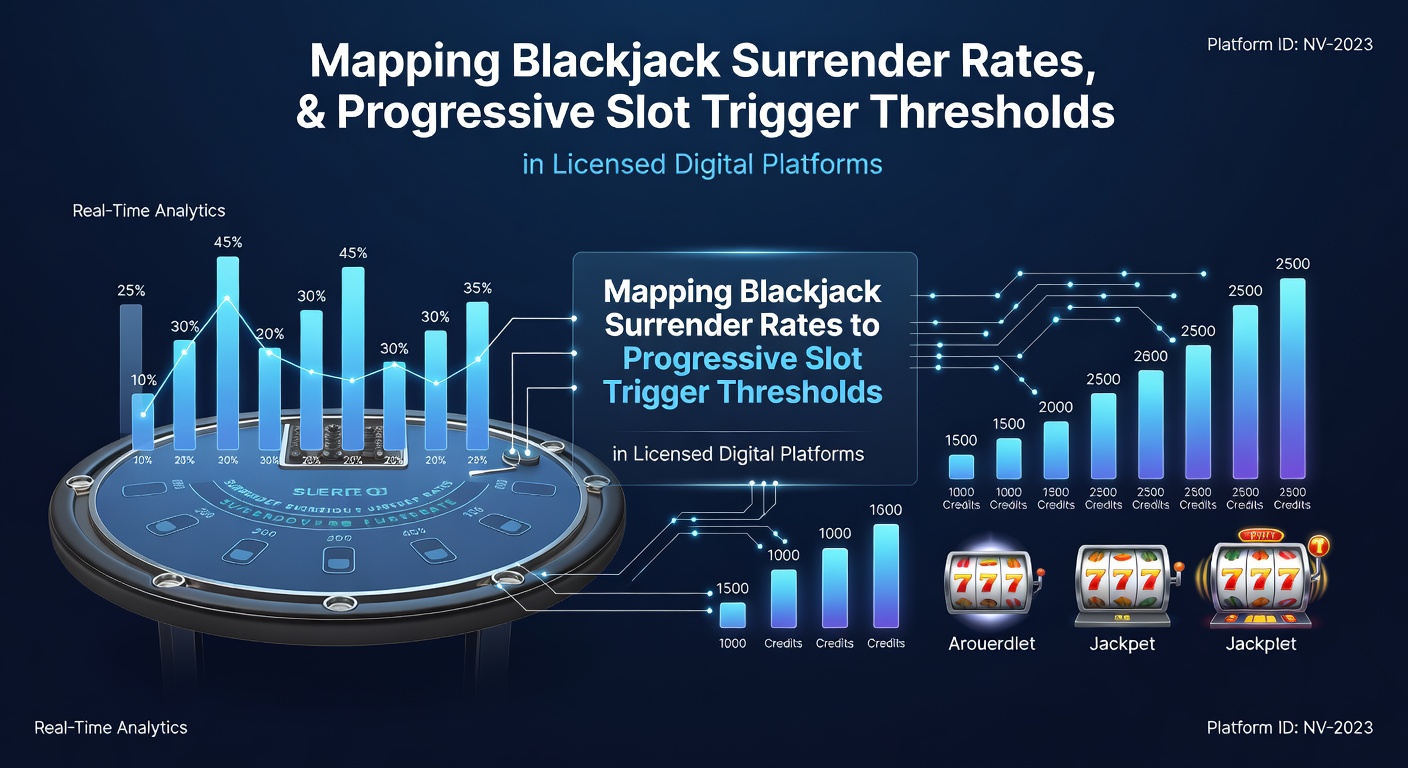
Digital casino platforms integrate blackjack surrender mechanics with progressive slot systems through algorithmic mappings that track player decisions against jackpot trigger points, and these connections appear in multiple licensed environments where operators adjust payout thresholds based on aggregated gameplay data. Surrender rates in blackjack refer to the percentage of hands where players forfeit their bet for half the stake, while progressive slot triggers activate when accumulated wagers reach specific monetary levels that unlock shared jackpot pools. Researchers at institutions such as the University of Nevada Las Vegas have examined how these two elements interact when players move between table games and slots within the same session on a single platform.
Core Mechanics of Surrender in Blackjack Variants
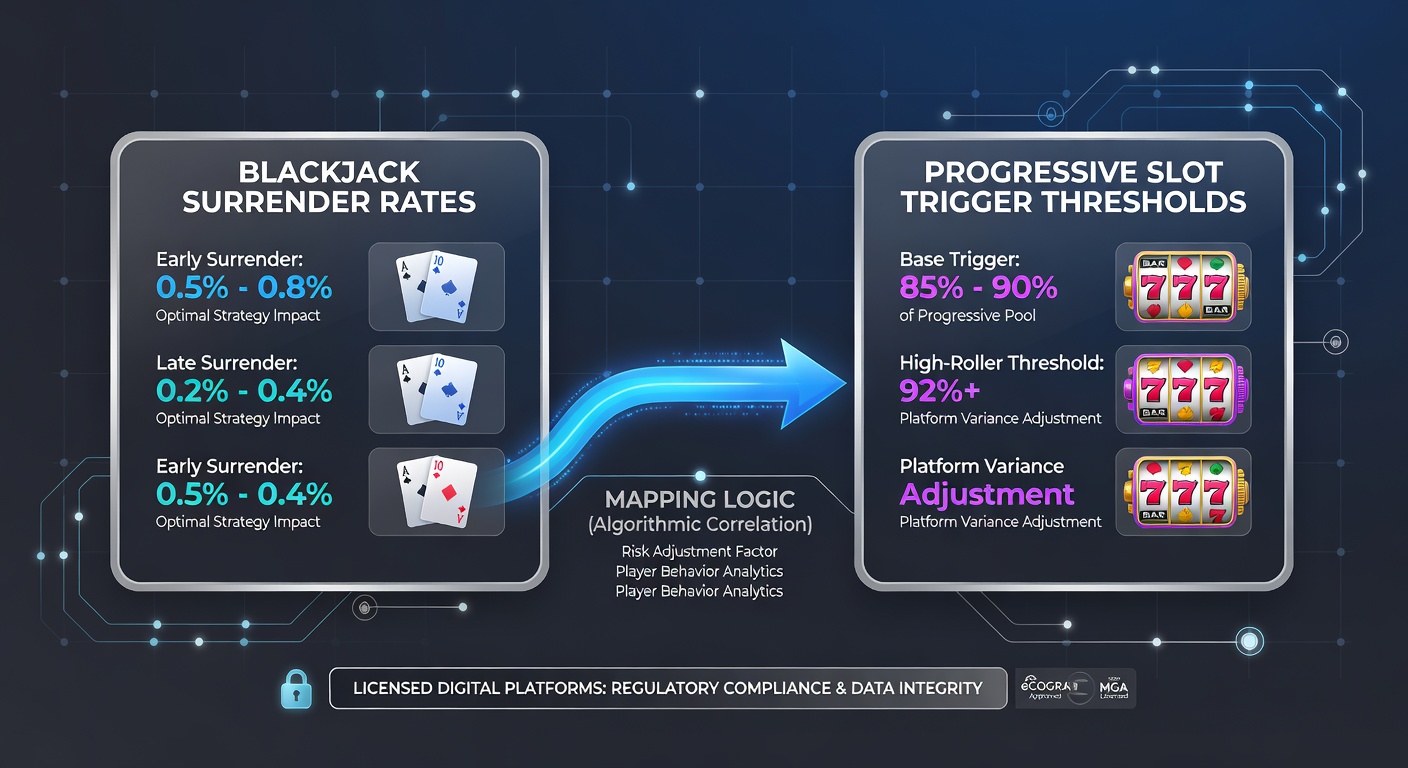
Blackjack surrender options divide into early and late surrender formats, with late surrender allowing players to fold after teh dealer checks for blackjack and early surrender permitting the action before that check occurs. Data from licensed platforms shows surrender usage climbing when dealer upcards reach ten or ace values, as these situations produce higher house edges that make partial recovery preferable to full continuation. Platforms record these choices in real time and feed the statistics into backend systems that calibrate slot parameters, including the frequency at which progressive meters advance toward activation thresholds.
Progressive Slot Trigger Thresholds and Their Structure
Progressive jackpots on digital slots accumulate across networks of machines or sessions, and operators set trigger thresholds that determine when a pool pays out based on total wagers contributed. Thresholds vary by jurisdiction and game type, with some systems requiring contributions from thousands of spins before release while others tie activation to fixed time intervals or combined bet volumes. Reports from the Nevada Gaming Control Board indicate that platforms licensed in that state maintain detailed logs linking individual player actions in table games to subsequent slot activity, creating datasets that reveal correlations between surrender frequency and the rate at which progressive meters climb.
Mapping Methodology Across Licensed Environments
Analysts construct mapping models by aligning time-stamped blackjack surrender events with subsequent slot spin sequences on the same player account, then calculating statistical relationships between surrender percentages and the distance to next progressive trigger. These models incorporate variables such as bet size, session duration, and game variant selection to isolate patterns that hold across different regulatory frameworks. One approach uses regression analysis to quantify how a one percent rise in surrender rate on blackjack tables corresponds to measurable shifts in slot contribution rates toward jackpot pools. Platforms apply these insights to adjust bonus eligibility rules that require minimum play across both game categories before unlocking enhanced progressive access.
Platforms in multiple regions have implemented these mappings since at least 2024, with updates to calibration algorithms continuing into 2026. In May 2026 several operators introduced revised threshold formulas that weight recent surrender data more heavily when forecasting progressive activation timelines, aiming to balance player engagement across game types.
Regional Regulatory Influences on Data Integration
Licensing authorities require operators to maintain transparent records of how player decisions in one game category influence mechanics in another, and these requirements differ by region. The Alcohol and Gaming Commission of Ontario publishes guidelines that address cross-game data usage, while the New Jersey Division of Gaming Enforcement monitors similar integrations for Atlantic City licensed sites. Observers note that platforms must demonstrate compliance through audit trails that document every step of the mapping process from raw surrender logs to adjusted slot trigger parameters. Such documentation helps regulators verify that mappings do not create unintended advantages or disadvantages for specific player segments.
Practical Examples from Platform Operations
Take one European operator that publishes aggregated statistics showing a 12 percent average surrender rate on its blackjack offerings paired with progressive slot triggers activating after an average of 2.4 million spins across its network. Another platform in the Asia-Pacific region reports that accounts displaying surrender rates above 18 percent reach progressive activation 7 percent faster on average than lower-surrender accounts, according to internal metrics shared with industry partners. These examples illustrate how mappings translate into observable outcomes without implying causation beyond the recorded correlations.
Conclusion
Mapping blackjack surrender rates to progressive slot trigger thresholds operates through structured data flows that licensed platforms maintain under regulatory oversight, and these processes continue to evolve with new calibration techniques introduced as recently as May 2026. The connections rely on statistical modeling that draws from multiple sources including academic studies and government agency reports, while external links to bodies such as the Nevada Gaming Control Board and the Alcohol and Gaming Commission of Ontario provide additional context on compliance standards across jurisdictions. Future refinements will likely incorporate more granular session-level variables as data collection capabilities expand.