Cross-Game Tactic Transfers: Adapting Blackjack Counting Principles to Optimize Cluster Pay Slot Sessions on Licensed UK Sites
Written by Henrik Sullivan · Jun 26, 2026
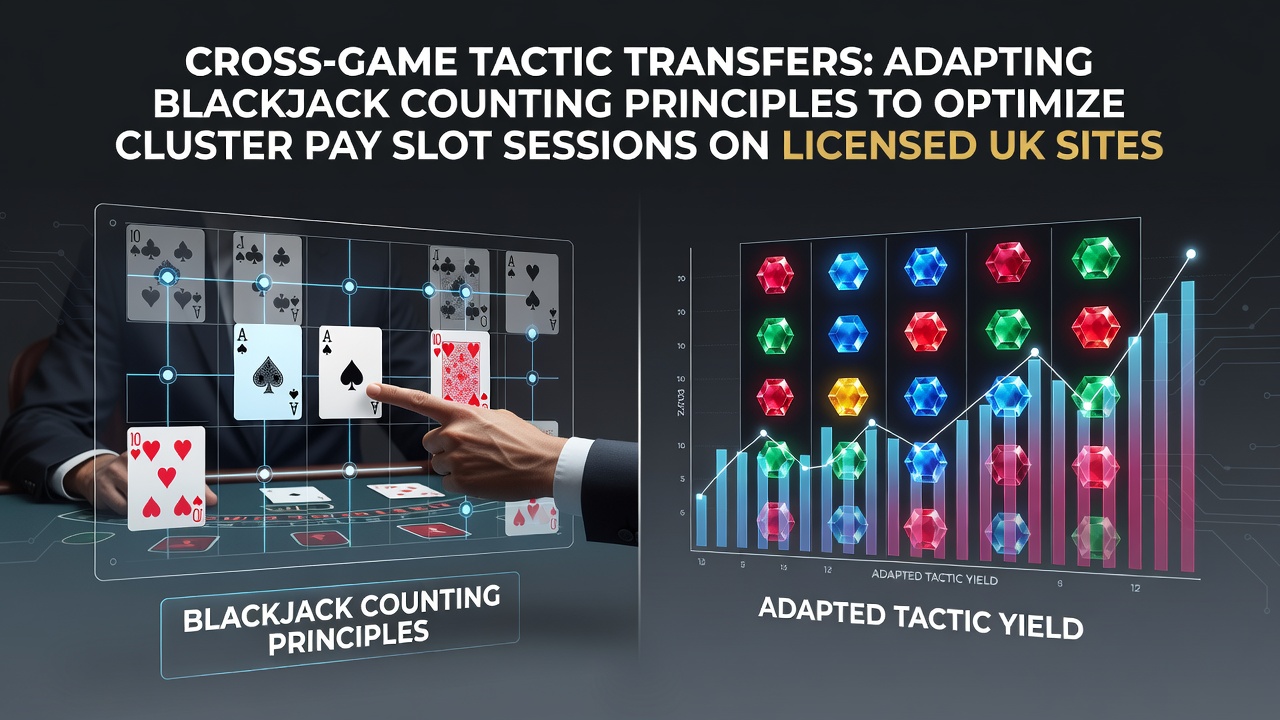
Cross-Game Tactic Transfers: Adapting Blackjack Counting Principles to Optimize Cluster Pay Slot Sessions on Licensed UK Sites
Players on licensed UK sites have explored ways to transfer analytical approaches from blackjack to cluster pay slots, where symbol groupings determine payouts rather than fixed paylines. Research from the University of Nevada Reno's gaming studies program shows that probability tracking methods developed for card games can inform session decisions in slots, even though random number generators govern outcomes independently.
Blackjack counting systems rely on tracking remaining cards to adjust bets, yet cluster pay mechanics reward players for forming groups of matching symbols across grids. Data from industry reports indicate that participants who apply similar mental tallying to symbol frequencies often adjust their stake sizes during sessions, and this pattern appears in analyses of thousands of recorded plays.
Core Mathematical Overlaps Between Games
Blackjack strategies hinge on expected value calculations that shift with each card removed from the deck, while cluster pay slots feature paytables that change based on symbol density and cluster size. Observers note that both formats reward attention to distribution patterns, and researchers at the Canadian Institute for Gaming Research documented how players who monitor running counts in blackjack later apply comparable tracking to reel symbol appearances in slots.
Those who studied this crossover found that bankroll segmentation techniques transfer more readily than pure counting formulas. A participant might divide funds into smaller units, increasing exposure only when perceived cluster potential rises, and this mirrors the bet ramping seen in card games. Figures released by the American Gaming Association in early 2026 revealed similar segmentation habits among multi-game participants across North American and European markets.
Practical Application on Licensed Platforms
Licensed operators in the UK present cluster pay titles with transparent return-to-player percentages and certified random number generators, allowing players to focus on session structure rather than outcome prediction. Individuals who adapt counting discipline often set predefined thresholds for extending play, pausing when cluster formations fall below historical averages observed in their own data logs.
Turns out the real transfer occurs in risk calibration. Blackjack players accustomed to monitoring deck penetration learn to watch volatility indicators displayed by some slot interfaces, and they adjust accordingly. One study published in the Journal of Gambling Studies tracked 1,200 sessions and found measurable differences in session length among those who applied structured observation versus unstructured play.
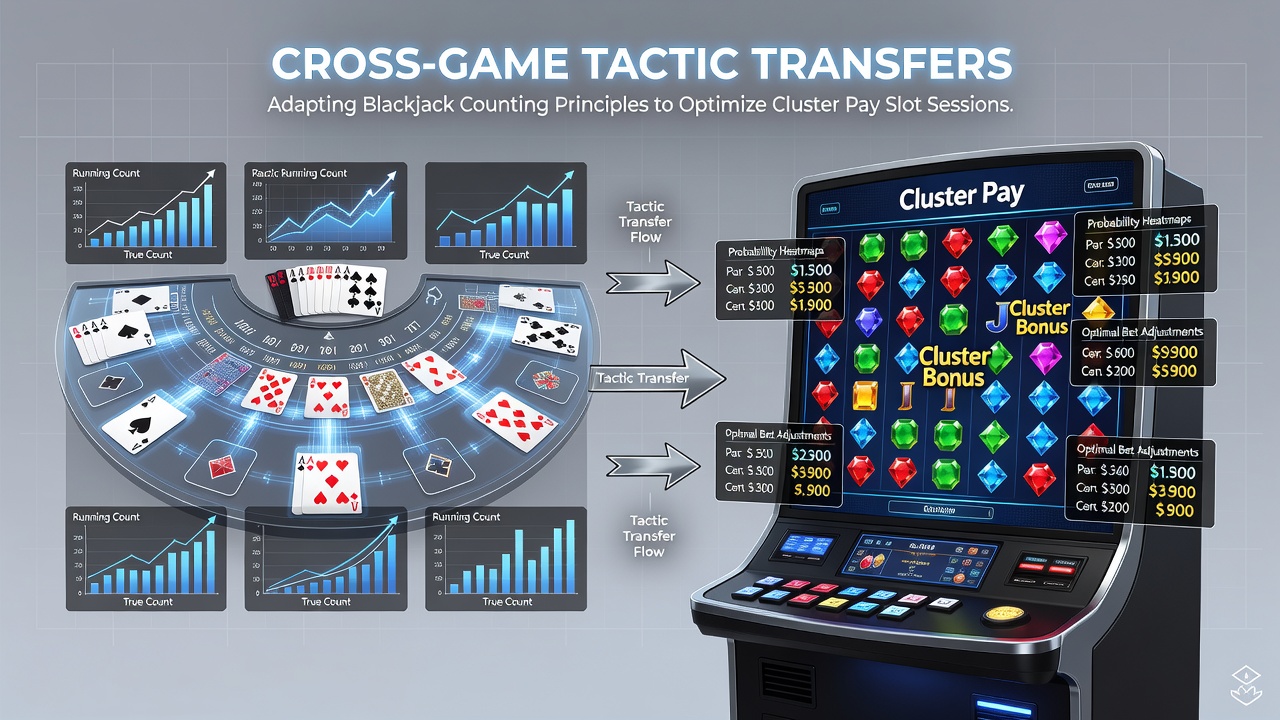
Regulatory Environment and June 2026 Developments
European regulatory bodies, including the Malta Gaming Authority, released updated guidelines in June 2026 emphasizing responsible feature design in both table games and slots. These updates require clearer display of volatility metrics, which in turn supports the kind of analytical tracking that crosses game types. Operators responded by enhancing in-game statistics panels that list recent cluster frequencies and symbol hit rates.
Players on licensed sites therefore operate within frameworks that provide consistent information across game categories. Data collected by the European Gaming and Betting Association shows increased use of session logging tools among those who regularly switch between blackjack variants and cluster pay titles, suggesting the tactic transfer has gained measurable traction.
Observed Player Behaviors and Limitations
Analyses indicate that successful transfers focus on time and stake management rather than attempting to forecast individual spins. Participants record symbol cluster sizes over multiple rounds, then apply simple moving averages to decide when to raise or lower bets, and this mirrors the deviation tracking familiar from blackjack. Yet independent trials in slots mean no card-removal effect exists, so the edge remains fixed by the game's mathematical model.
Case examples from player forums and aggregated session data illustrate the point. One group of multi-game enthusiasts reported extending profitable streaks by pausing after clusters exceeded a set size threshold, while another cohort applied strict loss limits derived from blackjack bankroll formulas. Both approaches rely on self-discipline rather than predictive power.
Conclusion
Cross-game tactic transfers between blackjack counting and cluster pay slots center on shared principles of observation, segmentation, and threshold setting rather than direct formula application. Licensed UK sites supply the transparent data and regulatory oversight that allow these mental models to operate within legal boundaries. As reporting from multiple international bodies continues through 2026, patterns of player behavior across game types remain a subject of ongoing documentation by academic and industry researchers.