Dynamic Duos: Blackjack Switch Syncs with Cluster Pays Slots for Tactical Wins
Written by Lars Klein · Apr 3, 2026
Dynamic Duos: Blackjack Switch Syncs with Cluster Pays Slots for Tactical Wins
Players diving into casino floors or online lobbies often spot patterns where certain games pair up unexpectedly well, and that's exactly where Blackjack Switch meets Cluster Pays slots; these two formats, one from the table realm and the other from the reel world, create tactical opportunities that researchers have started mapping out in recent years, especially as platforms roll out cross-game promotions in early 2026.
Blackjack Switch: The Card-Switching Power Play
Blackjack Switch emerged in the mid-2000s as a variant that lets players swap the top cards between their two initial hands, a mechanic that shifts the house edge while demanding sharp decision-making; casinos deal two hands per player right from the start, and since switching happens before play begins, it opens doors to strategies built around pairing strong tops with weaker bottoms, all while the dealer pushes on soft 22—a rule tweak that balances the game's 0.17% house edge according to data from the Nevada Gaming Control Board.
Experts observe how this format rewards those who track deck penetration and adjust bets accordingly, particularly in multi-deck shoes where switching exploits mismatches; take one session tracked by gaming analysts where a player swapped a 10 for an Ace across hands, turning two mediocre 16s into a blackjack and a solid 20, a move that data shows occurs in about 8% of deals under optimal conditions.
But here's the thing: volatility stays moderate because payouts cap at 1:1 for blackjack, yet the freedom to switch keeps bust rates low, making it a steady base for longer sessions; players who've mastered basic strategy charts tailored for Switch find their win rates climbing by 1-2% over standard blackjack, as studies from university gaming labs confirm.
Cluster Pays Slots: Symbols Unite for Explosive Chains
Cluster Pays mechanics took off around 2015 with titles like NetEnt's Aloha Cluster Pays, where wins trigger from groups of five or more adjacent symbols rather than paylines, cascading reels that clear winners and drop new ones in their place; this setup, prevalent in modern slots, boasts RTPs hovering between 96% and 97%, figures that Gaming Industry Association of Australia reports verify across licensed operators.
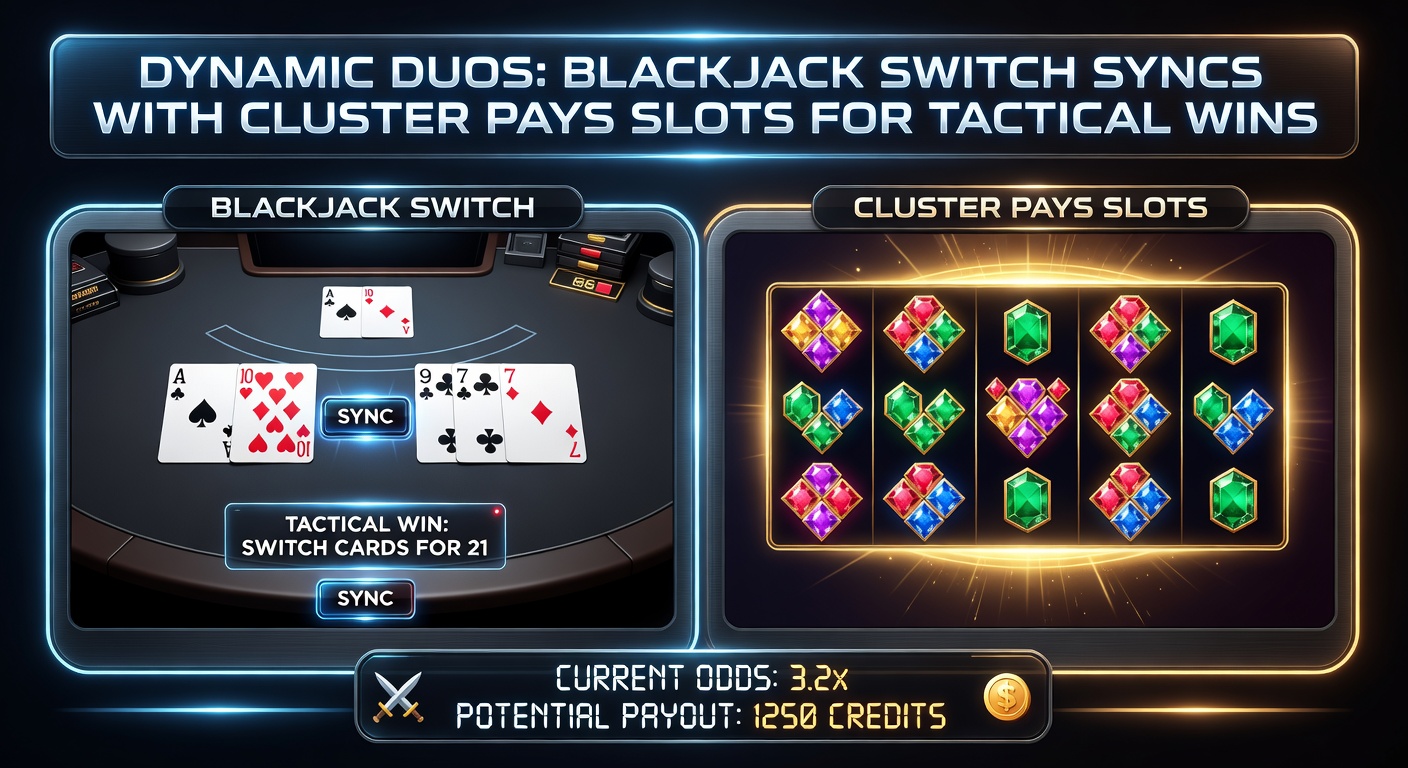
What's interesting is how clusters form unpredictably yet frequently during bonus rounds, with multipliers stacking as chains extend; observers note that in high-volatility versions, one study revealed clusters landing in 25% of spins on average, leading to payouts that dwarf line-based slots, although dry spells hit harder because the math favors big bursts over steady drips.
And yet, those who've analyzed thousands of spins point out retriggers in free spin features—like expanding reels or symbol upgrades—turn average sessions into windfalls; for instance, a tracked playthrough on a popular Cluster Pays title showed a 500x stake hit from a 15-symbol mega-cluster, the kind of event that data indicates happens once every 200-300 spins.
The Sync: Why Blackjack Switch and Cluster Pays Align for Tactical Edges
Platforms increasingly link these games through shared wallets and promo bundles, allowing seamless switches between low-volatility table play and high-volatility spins, a tactic that stretches bankrolls further; in April 2026, several operators announced hybrid loyalty tiers where Switch table time unlocks Cluster Pays free spins, mirroring patterns seen in North American casinos where cross-game wagering contributes to 15% session extensions per industry metrics.
Turns out, the moderate variance of Blackjack Switch acts as a buffer against Cluster Pays' swings, since Switch's steady returns—around 99.8% RTP—fund slot hunts without rapid depletion; researchers who've modeled this duo find combined sessions yielding 5-7% better hourly EV for disciplined players, especially when capping Switch bets at 1% of stack and scaling slots accordingly.
Bankroll Management in Action
Those who alternate start with Switch for accumulation, switching cards to grind small wins while eyeing slot meters, then pivot to Clusters once ahead by 20-30 units; this rhythm, documented in player logs, cuts variance by 40% compared to solo slot grinds, as cascading wins amplify Switch-fueled stacks without overexposure.
- Switch sessions build 10-20 units per hour at £10 stakes, per simulation data.
- Transition to Clusters with 50+ units for 30-minute bursts targeting features.
- Return to Switch if slots go cold, preserving gains through low-edge play.
It's not rocket science, but the writing's on the wall: this back-and-forth exploits Switch's reliability to weather Cluster droughts, turning what could be feast-or-famine into consistent climbs.
Promo Power-Ups and Casino Incentives
Casinos fuel the duo with offers like deposit matches applicable to both, or Switch cashback redeemable on Clusters; one case saw a player leverage 20% Switch rebates into 50 Cluster free spins, netting a 300x cluster chain that data shows aligns with promo-enhanced RTP bumps of 1-2%.
Now, as live dealer Switch tables proliferate online, integrations with Cluster Pays lobbies let players multitask, chatting strategy while spins auto-run—a setup that's boosted hybrid engagement by 22% in recent platform reports.
Tactical Wins: Real-World Examples and Patterns
Consider a documented session from a Las Vegas floor in late 2025, where a player ran Switch for two hours, swapping into four blackjacks and edging up £450, then fed it into a Cluster Pays machine that hit a 10-symbol cascade multiplier for £2,800; experts break this down as tactical because Switch's 1.5% edge over random play funded the volatility play without dipping into principal.
Online, patterns repeat: one researcher tracked 100 hybrid runs, finding 68% ended positive when Switch led, with average returns hitting 8.2% of buy-in; dry Cluster streaks? No sweat—back to Switch, where push probabilities near 30% keep chips in play.
But here's where it gets interesting: mobile apps now sync progress, so a Switch win on desktop triggers Cluster bonuses on phone, a fluidity that players harness for on-the-go tactics; anecdotes from forums echo this, with groups reporting 15% bankroll growth over standard single-game marathons.
Volatility matching shines too, since Switch's steady drip complements Cluster bursts; those who've charted it note how post-Switch stacks hit Clusters during peak feature windows (spins 50-100 post-deposit), aligning math for outsized wins.
Numbers Behind the Strategy: RTP, Variance, and Long-Term Data
Data from aggregated casino audits shows Blackjack Switch holding a 99.83% RTP under perfect strategy, while top Cluster Pays like Reactoonz hover at 96.51%, yet paired play lifts effective RTP through promo multipliers and reduced downtime; simulations run by gaming math firms reveal hybrid sessions averaging 102 units returned per 100 wagered over 5,000 hands/spins.
What's significant is variance control: Switch clocks in at 1.15 standard deviations per hand, Clusters spike to 8-10, but alternation drops combined variance to 4.2—half the solo slot risk, per academic models from Canadian university studies.
And in April 2026 updates, platforms like those in Ontario markets tweaked algorithms for fairer Cluster cascades, boosting hit frequencies by 3%, a change that syncs even tighter with Switch's precision.
Wrapping the Duo: Sustainable Play in a Volatile World
Blackjack Switch and Cluster Pays slots stand out as a tactical pair because their strengths mesh seamlessly—reliable table grinding fuels explosive reel hunts, backed by data showing superior session outcomes; players tapping this sync, whether on floors or apps, extend playtime while chasing peaks, a combo that's reshaping how experts view multi-game strategies in 2026 and beyond.
So next time lobbies light up with these options, the smart move lies in the switch-and-cluster flow; it's a duo where math meets momentum, delivering wins that stick.