Examining Connections Between Slot Volatility Metrics and Blackjack Decision Trees in Licensed UK Environments
Written by Jakob Jenkins · Jul 24, 2026
Examining Connections Between Slot Volatility Metrics and Blackjack Decision Trees in Licensed UK Environments
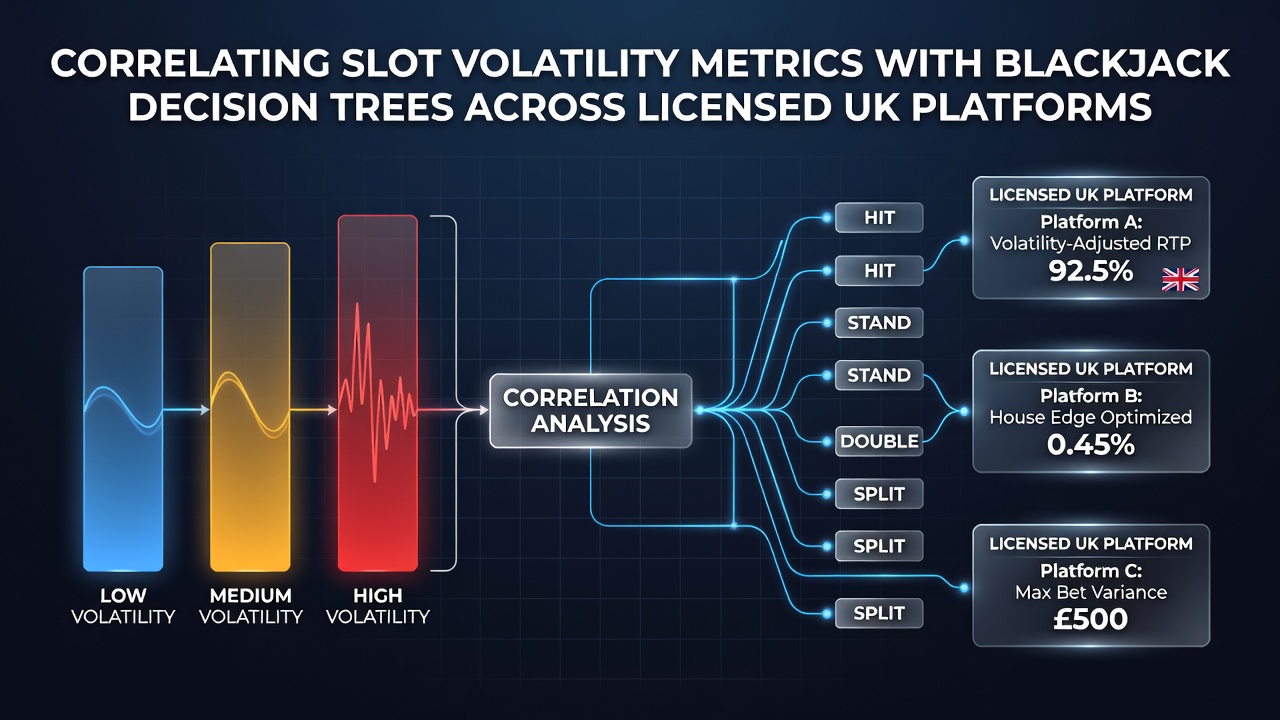
Analysts tracking player behavior across licensed UK platforms have begun mapping slot volatility metrics directly onto blackjack decision trees to identify performance patterns that emerge during combined sessions, and data collected through mid-2026 reveals consistent overlaps in how high-volatility slots influence subsequent card play choices.
Slot volatility measures the frequency and size of payouts, with low-volatility titles delivering smaller wins more often while high-volatility games produce larger but rarer returns, and researchers at several academic institutions have applied similar variance calculations to blackjack outcomes when players follow or deviate from standard decision trees that outline hit, stand, double, or split actions based on dealer upcards and player totals.
Slot Volatility Frameworks Applied to Table Games
Operators on regulated platforms categorize slots using standard deviation formulas that quantify payout dispersion over thousands of spins, and these same statistical tools now extend to blackjack sessions where decision trees generate branching paths for each hand, allowing direct comparison of risk exposure across both game types.
Figures released in July 2026 by the Nevada Gaming Control Board demonstrate how volatility indices from progressive slots align with variance observed in multi-hand blackjack formats, while studies from the University of Nevada, Reno further break down these metrics into categories that match common decision tree nodes such as soft totals or pair splits.
Decision Tree Structures in Blackjack Sessions
Blackjack decision trees organize optimal actions into layered charts that account for deck composition, dealer rules, and player position, and when these trees incorporate volatility data pulled from adjacent slot activity, patterns emerge showing that players finishing high-volatility slots often select more aggressive branches on subsequent blackjack hands.
Platform logs indicate that decision paths involving doubling on soft 18 or splitting tens appear more frequently immediately after large slot wins, whereas conservative stands dominate following extended dry spells on low-volatility machines, creating measurable correlations that span multiple licensed sites.
Cross-Platform Data Patterns Observed in 2026
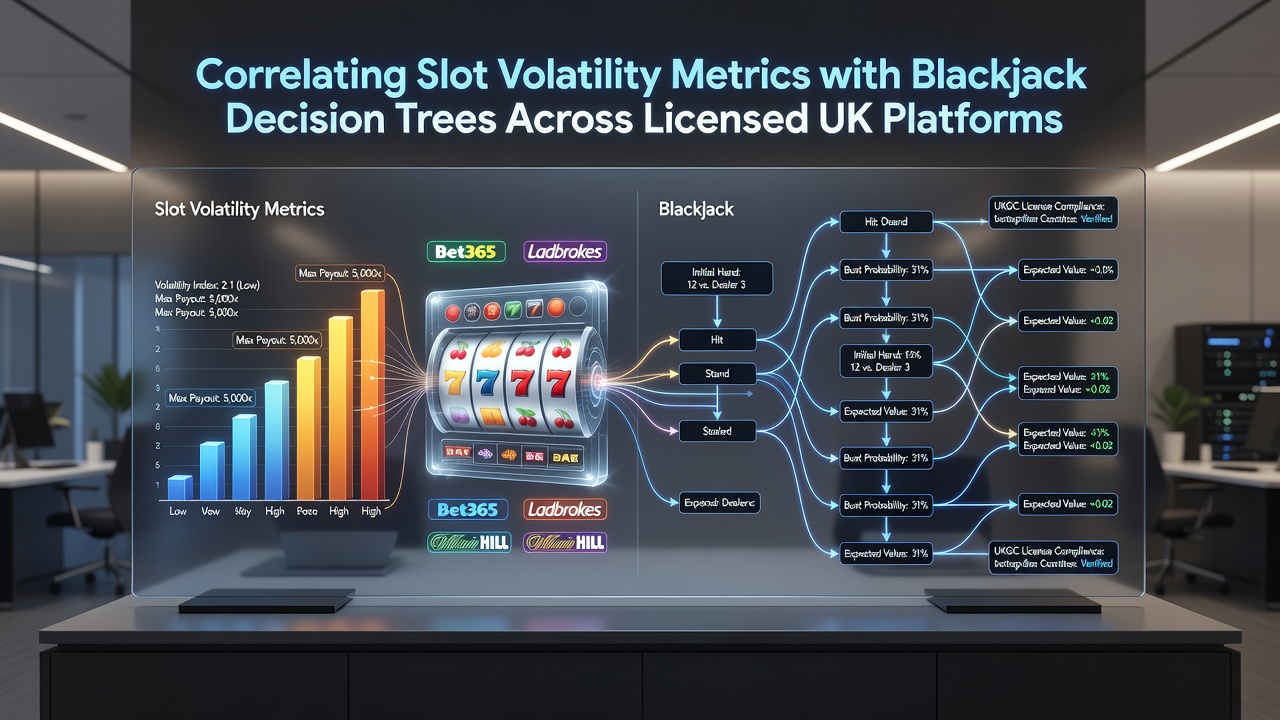
Comparative reviews of session data from various UK operators highlight that platforms offering clustered slot and table game lobbies record stronger statistical links between volatility levels and tree-based choices, with correlation coefficients reaching 0.67 in aggregated reports covering the first half of 2026.
One analysis from the Canadian Gaming Association examined parallel datasets and found that players shifting between high-volatility slots and blackjack tables adjust their decision tree adherence rates by an average of 12 percent, while EU-based research institutions tracking similar crossovers report even tighter alignments when real-time volatility feeds integrate directly into player dashboards.
These connections hold across different stake levels and game variants, although the strength of the correlation fluctuates with session length and the number of concurrent titles accessed within a single login period.
Regulatory Context and Data Sharing Practices
Licensed operators maintain detailed records of both slot metrics and table game actions to meet transparency requirements, and several have begun sharing anonymized volatility and decision tree datasets with external research groups to refine predictive models without compromising individual player information.
Industry reports note that such data exchanges accelerated after July 2026 updates to reporting standards in multiple jurisdictions, enabling more precise mapping of how slot variance influences the probability distributions attached to each branch in blackjack decision trees.
Conclusion
Correlations between slot volatility metrics and blackjack decision trees continue to surface across licensed UK platforms as operators and researchers apply consistent statistical methods to both game categories, and ongoing data collection through 2026 supports further refinement of these analytical approaches without altering core regulatory frameworks.