Respin Chains and Insurance Wagers: Mapping Player Choices Across Slot and Table Interfaces
Written by Paul Schwarz · Aug 12, 2026
Respin Chains and Insurance Wagers: Mapping Player Choices Across Slot and Table Interfaces
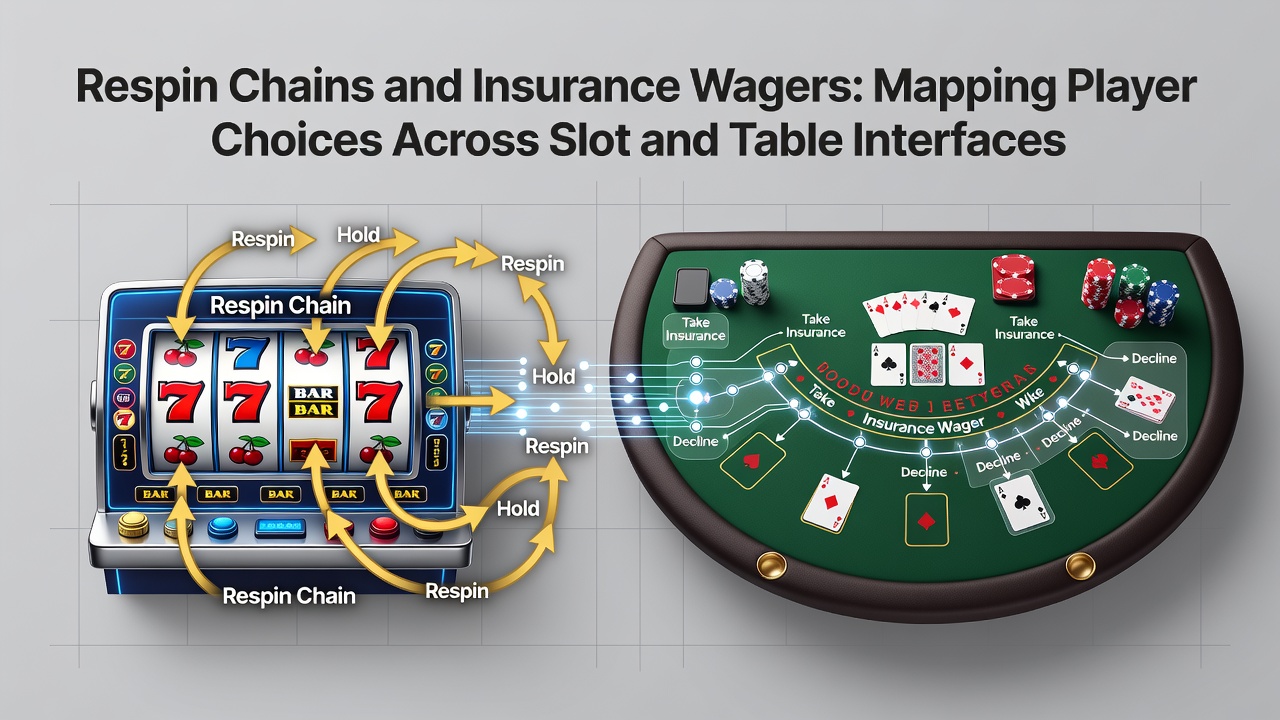
Respin chains appear in many modern slot titles as sequences where a single spin triggers additional reel spins under defined conditions, often building multipliers or locking symbols in place while the chain continues. Insurance wagers in table games such as blackjack allow players to place a side stake when the dealer shows an ace, protecting against a potential blackjack payout. These mechanics operate on separate interfaces yet share structural similarities in how digital platforms present decision points to users.
Core Mechanics of Respin Chains
Developers integrate respin chains into slot engines through trigger symbols or bonus rounds that activate repeated spins without requiring new wagers. Data from industry reports indicate that chain length varies by title, with some games capping sequences at five spins while others extend based on accumulated wilds or scatter counts. Players encounter these options through on-screen buttons or auto-play toggles that map directly to the game logic, and studies conducted by the University of Nevada Reno show that interface layouts influence selection frequency when chain previews display potential outcomes in real time.
Insurance Wager Structures in Table Environments
Insurance wagers function as optional side bets typically limited to half the original stake, paying 2:1 if the dealer completes a blackjack. Regulatory filings from the Nevada Gaming Control Board document consistent payout ratios across licensed venues, while digital table interfaces embed the wager prompt in a dedicated panel that appears only when the dealer ace condition is met. Observers note that these prompts often sit adjacent to the main betting area, allowing quick selection without interrupting the primary hand flow.
Interface Mapping and Player Navigation Patterns
Across slot and table platforms, designers align choice architecture so that respin activation buttons and insurance wager checkboxes occupy predictable screen zones. Research published by the National Council on Problem Gambling highlights that consistent placement reduces decision latency, particularly when players transition between game types within the same session. In August 2026 several North American operators introduced unified control overlays that display both respin chain status and insurance eligibility in a single dashboard view, streamlining navigation for users who alternate between reel and card formats.
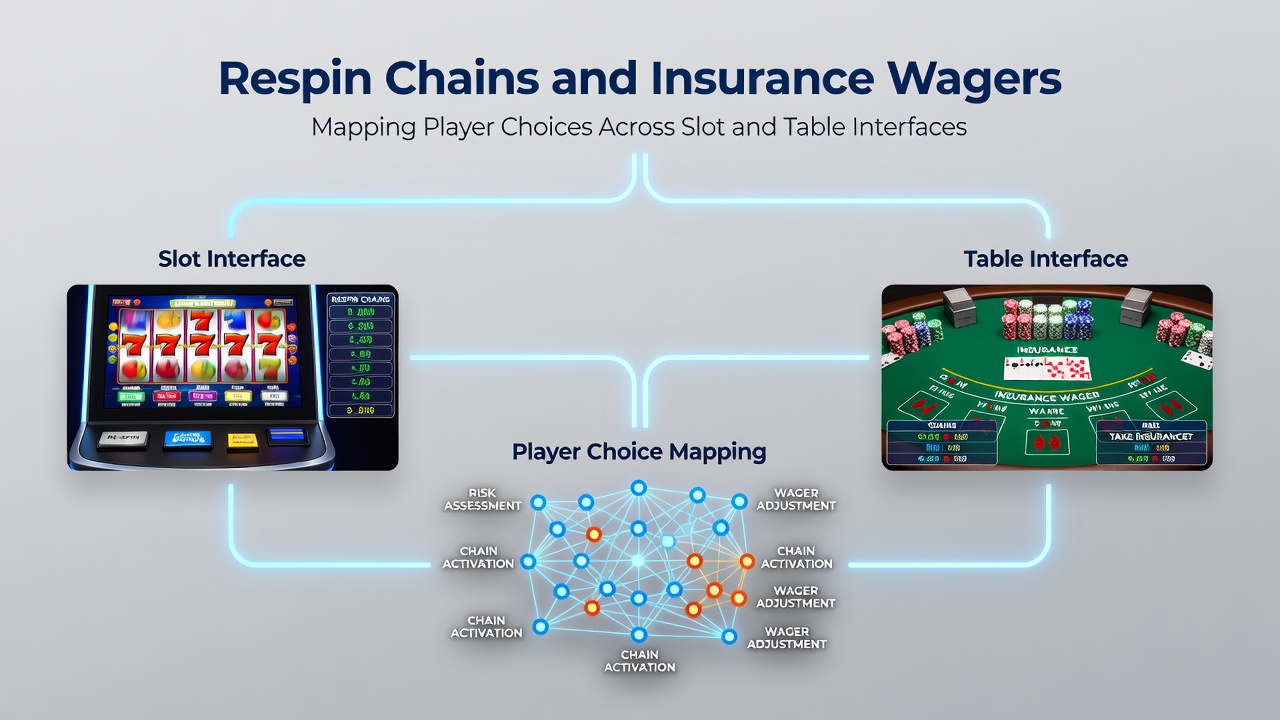
Mapping extends beyond visual layout to include probability indicators. Slot interfaces frequently overlay chain-progress meters that update after each respin, while table screens show running insurance odds calculated from remaining deck composition. Those who have examined user logs report that players who engage respin chains tend to review these meters before committing to insurance options when both appear in parallel sessions.
Cross-Game Decision Factors
Player choice patterns reveal that bankroll allocation influences whether individuals pursue extended respin sequences or place insurance wagers. Figures released by the Canadian Centre for Gaming Research indicate that sessions involving chained respins average longer duration than those limited to single insurance decisions, partly because chain outcomes unfold over multiple automated steps. Interface tools such as bet-size sliders and quick-select toggles appear in both environments, yet their default settings differ: slot platforms often default to maximum chain activation while table interfaces leave insurance unselected until manually chosen.
Regulatory Context and Implementation Trends
Jurisdictions outside the United Kingdom have updated display requirements for these features. Australian state regulators, for instance, now require clear separation between primary game controls and optional wager prompts to prevent unintended selections. Similar guidelines from the New Jersey Division of Gaming Enforcement emphasize transparent probability disclosures within the same interface panels that host respin and insurance options. These rules took effect progressively through mid-2026, prompting software providers to revise overlay designs across multi-game lobbies.
Conclusion
Respin chains and insurance wagers represent distinct yet comparable layers of player agency within slot and table ecosystems. Their presentation through mapped interfaces continues to evolve under regional oversight, with operators incorporating unified dashboards and probability indicators that reflect broader trends in digital gaming design. Data from multiple oversight bodies confirm that these mechanics maintain fixed mathematical structures while interface refinements shape how choices are accessed and executed.