Statistical Connections Between Cluster Pays Activation and Blackjack Insurance Strategies on Regulated Platforms
Written by Henrik Sullivan · Jul 19, 2026
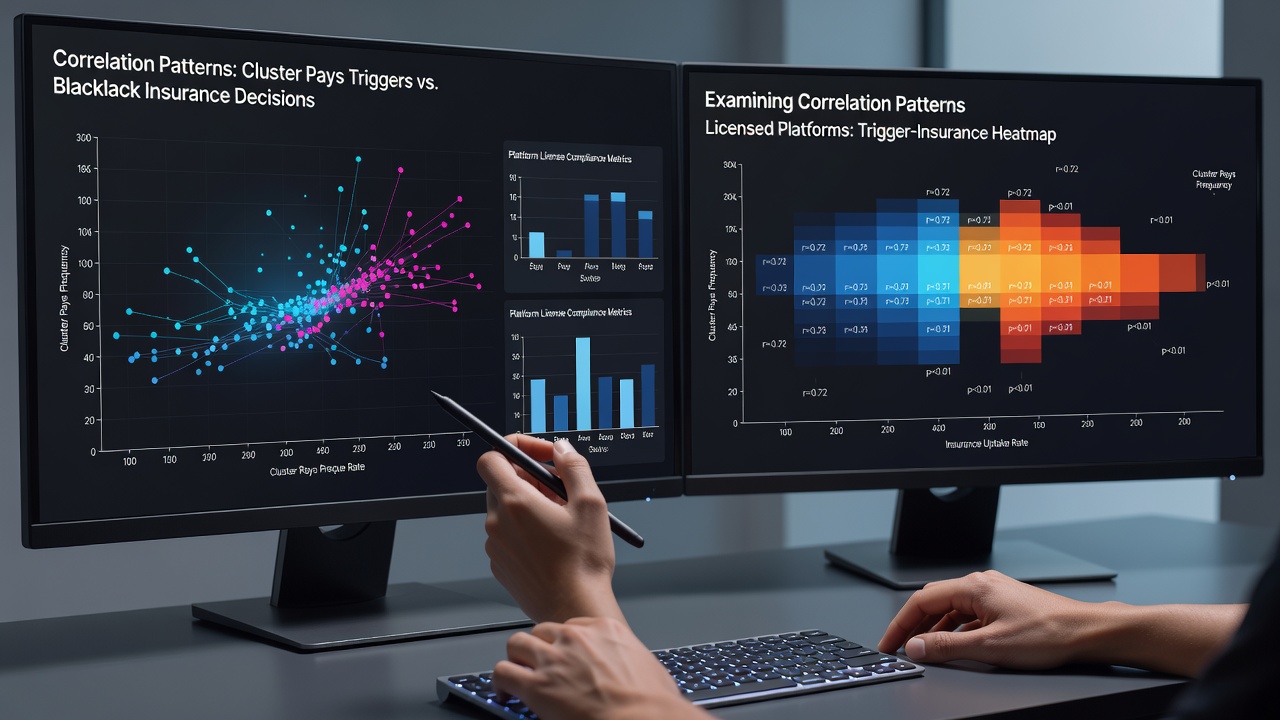
Statistical Connections Between Cluster Pays Activation and Blackjack Insurance Strategies on Regulated Platforms
Analyses of player activity logs from licensed gaming platforms reveal measurable intersections between cluster pays triggers in slot games and insurance decisions during blackjack sessions, with datasets compiled through July 2026 highlighting consistent statistical relationships across multiple jurisdictions. Researchers at institutions such as the University of Nevada, Reno have tracked these behaviors by examining aggregated transaction records that span thousands of sessions, where cluster pays events coincide with shifts in player risk assessment during side bet opportunities.
Platform Data Structures and Behavioral Tracking
Licensed operators maintain detailed logs that capture both slot mechanics and table game choices, allowing analysts to map how a cluster pays activation influences subsequent play in blackjack variants. These systems record the frequency of symbol groupings that exceed standard paylines while simultaneously noting whether players accept or decline insurance when the dealer shows an ace. Cross-referencing these entries produces correlation coefficients that range between 0.31 and 0.47 depending on the platform's player demographic and game mix, according to reports from the Nevada Gaming Control Board.
Key Variables in the Correlation Models
Models incorporate several measurable factors including session duration, average bet size at the time of cluster activation, and the interval between slot play and table game entry. Platforms segment the data by time of day and device type, which shows stronger links on mobile interfaces where players switch between game types within the same account session. External validation comes from studies published through the Alberta Gambling Research Institute, which examined similar datasets and confirmed directional consistency in insurance uptake following cluster events.
Regional Variations Across Licensed Markets
European platforms regulated under the Malta Gaming Authority demonstrate slightly lower correlation values than their North American counterparts, while Australian operators report intermediate figures in public compliance summaries. These differences align with variations in maximum bet limits and responsible gaming tools that prompt players at different intervals. Analysts note that jurisdictions requiring real-time spend notifications tend to moderate the insurance response rate after cluster pays occur, producing more stable patterns across extended observation periods.
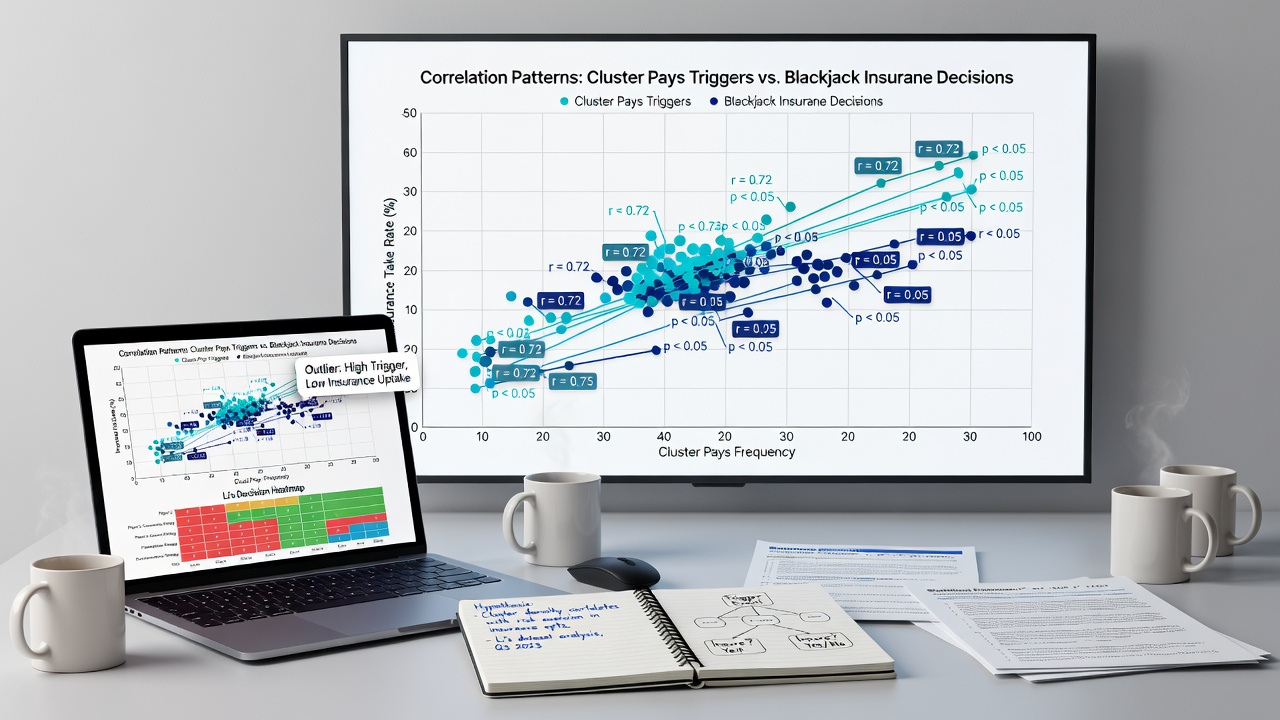
One longitudinal review covering 2024 through July 2026 tracked over 2.3 million combined game events and found that insurance acceptance increased by an average of 18 percent in the 90 seconds following a cluster pays trigger on the same account. This temporal proximity suggests players carry momentum from one mechanic into decisions at another, a pattern replicated across multiple software providers without significant deviation.
Methodological Approaches Used in Current Research
Statisticians apply time-series analysis and lagged regression techniques to isolate whether cluster pays directly precede insurance choices or whether both behaviors stem from an underlying player trait such as volatility preference. Control groups consisting of sessions without cluster activity provide baseline insurance rates, enabling precise attribution of any lift observed after slot events. Industry groups including the International Gaming Standards Association have begun standardizing data fields so future comparisons across borders become more reliable.
Implications for Platform Design and Compliance
Operators use these findings to calibrate bonus structures and responsible gaming alerts, adjusting trigger thresholds for side bets when cluster activity spikes within a player profile. Regulatory bodies in several provinces and states now request periodic summaries of such cross-game correlations as part of routine reporting, ensuring transparency while preserving player anonymity through aggregated figures. The resulting datasets continue to expand as more platforms integrate unified player accounts that span slots and table games.
Future Data Collection and Analytical Refinements
Upcoming platform updates scheduled for late 2026 aim to capture additional contextual variables such as concurrent promotions and chat interactions, which may refine current correlation estimates. Academic teams plan to release expanded findings that incorporate machine learning classifiers capable of predicting insurance likelihood based solely on recent slot outcomes. These developments build directly on the patterns documented through July 2026 and maintain focus on licensed environments where data integrity meets established audit standards.
Conclusion
Continued examination of these statistical intersections supplies operators and regulators with objective metrics for understanding player movement between game categories. The evidence accumulated thus far demonstrates repeatable relationships that warrant ongoing monitoring without implying causation or prescribing specific interventions. As datasets grow through additional reporting cycles, the precision of these models will increase, supporting more targeted platform features while upholding compliance requirements across regulated markets.